1 · Thatch assessment
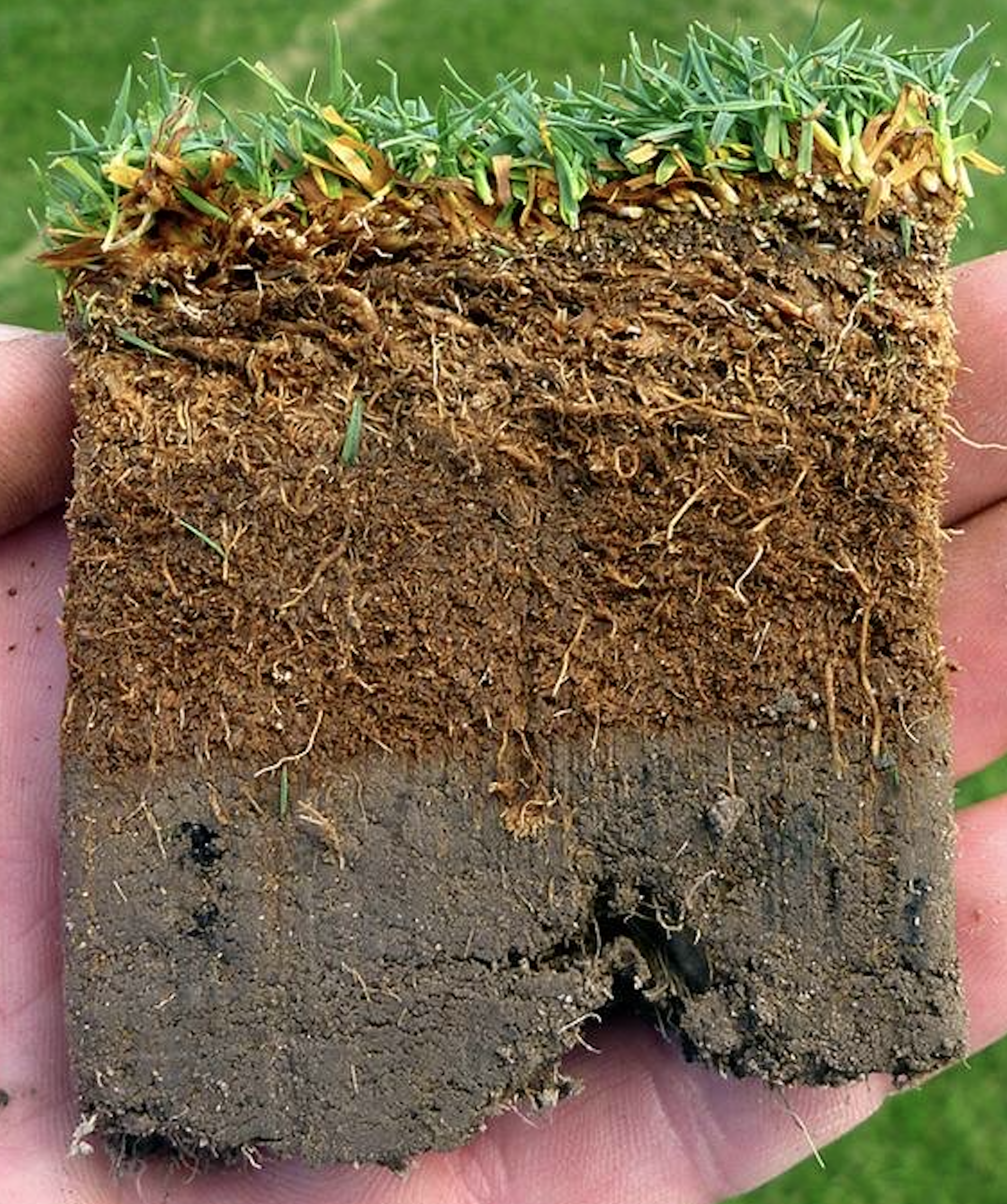
Measure the fibrous organic layer above the soil, distinguishing it from the mineral-containing mat layer. Take several samples from representative locations and check thickness uniformity.
Illustrative profile
Vertical dimensions exaggerated for readability; not to scale relative to the soil.
Literature reference: approximately 12.7 mm
A frequently cited turfgrass reference, not a universal limit or automatic decision threshold. Consider the measurement method as well.
Photographic sampling examples
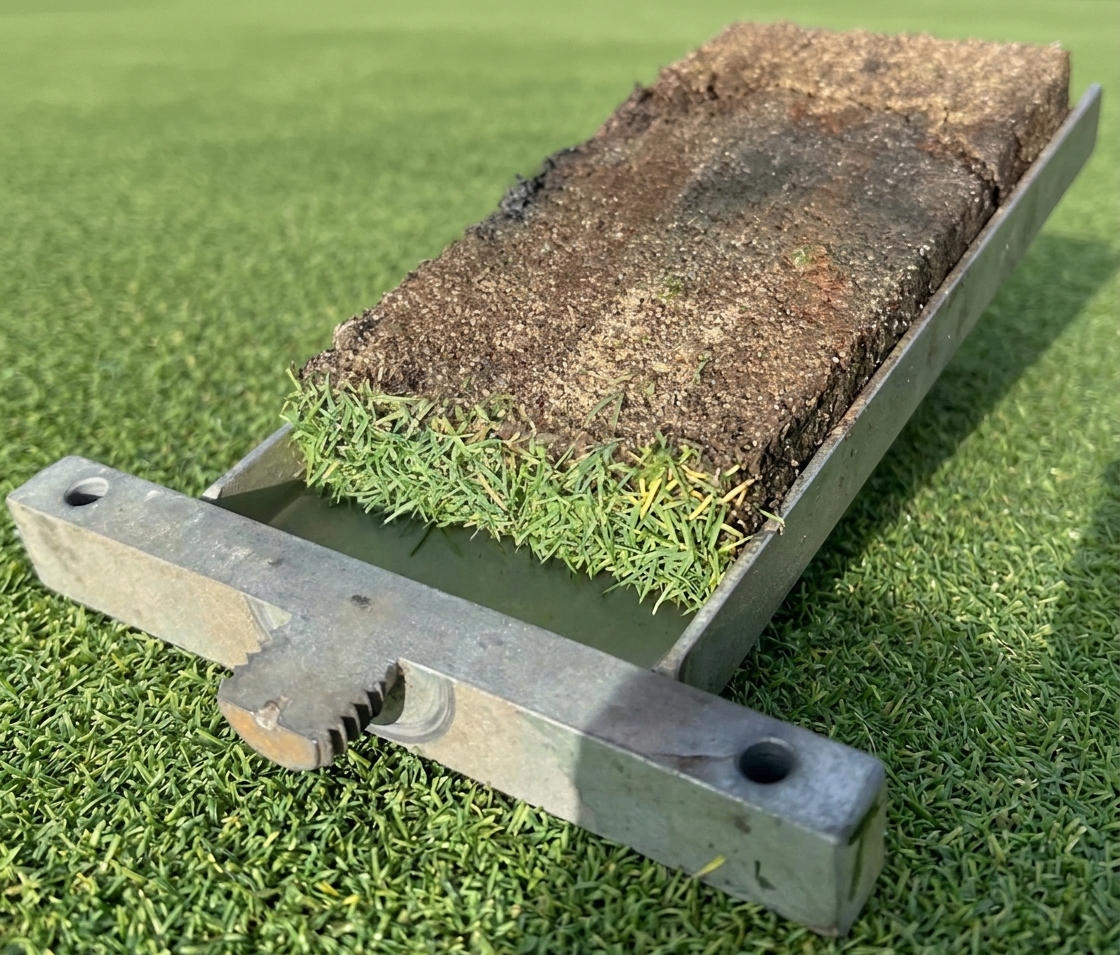
Select a photograph to enlarge it. The images illustrate profile assessment but cannot, on their own, quantify thatch thickness.

2 · Observed conditions
3 · Agronomic interpretation
This tool does not estimate probabilities, percentage effectiveness, sand application rates or millimetres of thatch removed: such values require local measurements and calibration.
4 · Seasonal growth and treatment timing
The curves show an illustrative pattern of cool-season (C3) and warm-season (C4) turfgrass growth, without reference to a specific location. The selected group’s curve is highlighted automatically.
Indicative windows for verticutting and core aeration
The coloured bands indicate approximate periods for temperate Northern Hemisphere climates, not automatic recommendations. Core aeration to relieve compaction may require different considerations from thatch management. Avoid disruptive operations during dormancy, drought or stress, and always assess recovery potential.
Comparison of management practices
Routine management
Review nitrogen inputs and irrigation to avoid excesses, support balanced growth and monitor thatch development.
Hollow-tine core aeration
Removes some material and improves exchange within the profile; particularly useful where compaction or reduced infiltration is present.
Verticutting
Cuts and removes fibrous material. Intensity and depth must be matched to turf vigour; temporary stress is expected.
Topdressing
Can help dilute organic matter when applied repeatedly in a programme compatible with the soil; it is not an automatic remedy for excessive existing thatch.
Scientific references
NC State Extension — Guide to Fraise Mowing Bermudagrass
University of Delaware Extension — Thatch Management for Turfgrass Systems (2025)
University of Missouri Extension — Managing Thatch in Home Lawns
Scientific background — Water-repellent areas and water management
Water-repellent areas (localized dry spot) can develop when soil particle or organic matter surfaces become difficult to wet. Accumulation of thatch and organic matter may contribute to uneven water distribution, but 17 mm of thatch alone does not establish water repellency: infiltration, moisture and water movement within the profile must be assessed separately.
Prevention and integrated management: monitor dry patches after irrigation, check irrigation system uniformity, assess moisture distribution through the profile, and manage thatch using practices suited to the season and turf recovery capacity. Wetting agents can be a complementary tool, but do not replace sound irrigation and agronomic management.
Independent NIBIO fairway research
A technical article by Andy Owen, published by ICL on 14 May 2026, summarises a two-year trial at the NIBIO Turfgrass Research Center in Norway comparing seven wetting-agent technologies on sandy cool-season turfgrass fairways. During the most severe drought period of 2024, untreated plots required 116 mm of irrigation water compared with 90 mm for H2Pro TriSmart: 22% less under the trial conditions. Qualibra achieved the best visual quality during the final stages of severe water stress.
The finding concerns cool-season turfgrass fairways, not ornamental lawns of Cynodon dactylon; therefore, the 22% water saving cannot be directly extrapolated to the simulated case. The trial primarily investigated drought response and wetting-agent technologies: it does not demonstrate that thatch reduction caused the results. No treatment fully replaced adequate irrigation.
Read the original ICL article — Independent Fairway Trial ↗
Source: ICL Growing Solutions, Andy Owen, 14 May 2026; NIBIO trial on fairways under drought conditions.